
About Human Hair Wig Supply
A quiet sourcing atelier for premium human hair full wigs, working for boutiques, custom studios, private label brands and distributors in Europe and North America.
Send a Reference Image Ask about material and sample optionsBriefs and replies in English or French

A Sourcing Atelier for Premium Human Hair Full Wigs
Human Hair Wig Supply does one job for wig businesses: it takes the style a buyer wants to sell and makes it something that can be bought, checked and bought again.
The word atelier is deliberate. The work is closer to tailoring than to wholesale: each style is taken in, written up and fitted to the buyer before anything is ordered.
Buyers here are professionals who sell, fit or brand wigs for their own customers. They arrive with one of two things:
- One look a client keeps asking for
- A whole line to build
In both cases the starting point is a picture of a finished style, and the need to receive that style, order after order, looking the way the picture looks.
-

One product.
Premium human hair full wigs. Every conversation is about a full wig on a wearer.
-
One document per style.
The purchasing brief. Pricing, sampling, ordering and reordering all refer to it by name and version.
-
One way of answering.
A question about a style is answered in writing, in that style's brief, so the answer stays attached to the wig it belongs to.


Sourcing Atelier, Not Stock Catalogue: What Is Done and Left Out
A buyer arrives with a style and leaves with a written description of it that every later wig is made to. That choice decides the daily work, and it decides just as clearly what stays out of it.
The things left out are deliberate. Each one removes a point where the wig you receive could drift from the wig you meant.
| Done | Left out | What you get |
|---|---|---|
Start from your target style | Left out: A stock catalogue of wigs to choose from | A range made of your styles, described in your terms |
Write the style into a brief before pricing it | Left out: A quote from a picture alone | One document behind the price, the sample and the order |
Mark what an image cannot show as open, and ask | Left out: A guess written into a missing field | Every gap put in front of you before a sample is made |
Make samples to a version you confirmed | Left out: A sample started while a field is open with nothing written in it | A sample you can check against a page you agreed |
Answer hair and cap questions per style, in writing | Left out: Hair and cap sold as fixed catalogue grades | Your choice recorded in the brief, against your own target |
Order and reorder to the approved brief | Left out: A field changed between orders without a new version and a new sample | A reorder that is the wig you approved |
Keep one brief per style | Left out: Several styles merged into one description | Each style approved and reordered on its own |
One confirmed description per style, kept and reused for as long as you sell it.
Five Things You Keep for as Long as You Sell a Style
What this asks of you is a little more at the start: a reference image, and answers on the fields marked open. Close them one by one, or leave some for a written proposal.
What comes back lasts for as long as the style stays on your list.
Built for wig businesses that sell a style by name and need it to arrive the same way each time.
Send a Reference ImageA price inquiry that refers to something exact
When you ask what a style will cost, the question and the answer point to the same brief.
A sample you can judge
You check it against a page you confirmed, so a difference is a named field with a note, and the correction goes into a new version.
A bulk order with no reinterpretation
The approved brief is the instruction. Nobody re-reads the original photo.
Reorders you can place in one line
The brief name and version are enough.
A record you own
Every brief and every version stays on file under your buyer name, ready to hand to a new colleague or a new client.


The Purchasing Brief Runs the Company, Not Only Your Order
How the brief works field by field is set out on the home page. Here is what it means for the way the company operates.
Every message names its brief and version
When a message reaches you about a wig, you know which description it is talking about.
Agreements live in the brief
If something about a style is settled in a call or a chat, the updated brief follows, with the change in its version note.
Each sample and each order is tied to one version
At any point you can ask which version a wig was made to, and get one answer.
The brief belongs to your account
It is filed in your library, described further down this page.

v1 and v2 kept on file
Every Style Has a Name, a Version and One Page
Four kinds of wig business, four usual starting points. The brief is the same page for all of them; what changes is which fields you settle first.
 Boutiques |
 Custom studios |
 Private label brands |
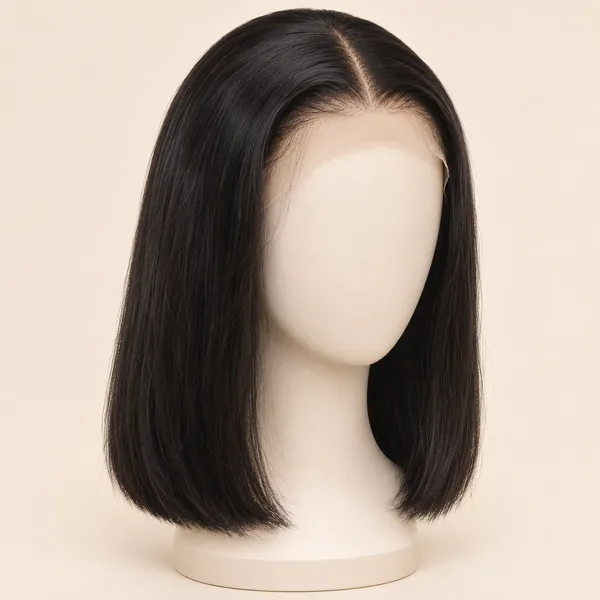 Distributors |
|
|---|---|---|---|---|
| Starts from | The look your customers ask for by name | One wearer's look, with your fitting notes | The lead style of a line, or a short group | A set of styles your market asks for |
| Usually agreed first | Target style and length; hairline and parting where the photo shows them | Hairline and parting from your notes; cap size when you have measured | Target style from several images; style names from your line | Each style on its own brief, with its own marks |
| Usually open | Colour, cap construction, cap size | Cap size when not given; colour until set against the wearer's hair | Colour, cap construction and density, listed against your brand's target | Grouped by what closes them, across the set |
| Briefs grouped by | Floor style | Wearer look, under your own reference | Brand line | Market list |
| After approval | Restocking is one line: name and version | The client's next wig is a reorder of the same version | Your line is a set of approved briefs | Each style reordered on its own |
Filled dot: usually settled at the start. Open circle: usually marked open, with what is needed to close it.
Boutiques Start With the Styles Their Clients Ask For
A high-end wig boutique usually starts from its own floor: the look its customers ask for by name, or the style it sells out of first. You send a reference image for that style, and the first brief comes back.
A boutique's first brief tends to look like this
- Target style and length read clearly from a lookbook, campaign or social photo, often a shot of the style worn.
- Colour marked open more often than not, because most photos of this kind are edited. Close it with an unedited photo, a swatch, a hair sample you already sell or a wig from your stock.
- Hairline and parting filled in where the photo shows them, with the fringe and part position noted.
- Cap construction and cap size open, waiting for your choice.


After approval
Buying again is simple. Each style on your floor has a brief name, and restocking is one line: the name and the version.
A variation of a style that sells
A shorter length or a softer root becomes a new version and is sampled before it is ordered. The original version stays on file, so you can keep ordering both.

Custom Wig Studios Start With One Wearer's Look
A custom wig studio usually starts with one wearer. You send a reference image of the look your client wants, together with what you already know from fitting them: how they like the hairline, which side they part on, whether the part should move.
A studio's first brief carries more from you than from the image
- Hairline written from your notes as well as the photo: edge shape, softness, baby hair, fringe.
- Parting with position and type decided by the wearer's preference.
- Cap size often given by you at the start, since you have measured the client. When it is not given, it stays open.
- Colour written against the wearer's own hair or a sample you hold.

The brief needs your studio's name and a style name you choose. It never needs your client's name.
File the look under any reference that makes sense to you, and the library lets you find it again by the name you gave it.
After approval
The client's next wig is a reorder of the same brief and version.
When the look changes
A new fringe or a different length is a new version, sampled before it is made. Studios working with many wearers keep one brief per look.
Private Label Brands Start With the Lead Style of a Line
A private label brand usually starts with the style that will lead its line, or with a short group of styles planned together. You send the references, often campaign images or a moodboard for each style, and one brief is written per style.
A brand's first briefs tend to look like this
- Target style read from several images at once, with a note of which image each field was taken from.
- Colour, cap construction and density written against your brand's target, with the open fields listed.
- Style names taken from your own line, so the brief already uses the name you will sell it under.
- Label and packaging direction discussed with you per brand.
A style developed from nothing
The same route: the fields are written from your references, the open ones are marked, and the first sample is made once the brief is confirmed.
After approval
Your line is a set of approved briefs, one per style, and each unit carrying your label is made to that brief. Adding a style is a new brief; updating one for a new season or colour is a new version, sampled and confirmed before it reaches your customers.


Each field in the brief notes the image it was read from.
Distributors Start With a Set of Styles for Their Market
A professional distributor usually starts with a set: the styles its boutiques and salons ask for, gathered in one inquiry. You send the references together, and each style gets its own brief.
- One brief per style, each with its own agreed and open marks.
- Open fields grouped by what is needed, so a single swatch or decision from you can close several briefs at once.
- Styles moving at their own pace: an early style can be approved and ordered while a later one is still in revision.

One set, four styles, each at its own stop
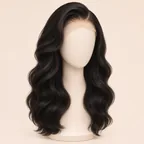
Loose curl long
Reordered by name and version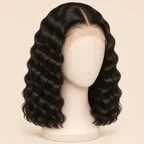
Deep wave long
Approved brief, first order placed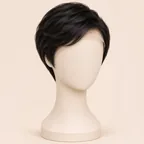
Short pixie
Revised sample to brief v2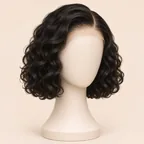
Curled bob
Brief v1, two fields openAfter approval, your approved briefs become the list of styles you offer your own customers. Each one is reordered on its own, by name and version, and none of them waits for the others.
When one of your customers asks for a variation, it goes in as a new version of that style, sampled before it joins your list. Copies of any brief can be passed to your sales team, so the style they offer is the style on file.

Send a Reference Image to Start Your First Brief
Send the style you want to sell. A first brief comes back with the readable fields filled in and the open fields listed with what is needed from you.
Send a Reference Image or send the photo on WhatsAppRepeat Orders: Same Style, Changed Style or New Style
Once you have a first approved brief, every later order starts in one of three ways. Each has its own route, and you always know which one you are on.
The same wig again
You send
Brief name and version
What happens
The order is made to the approved brief.Soft wave lob · v2
The same style with a change
You send
Brief name and the field you want changed
What happens
A new version is written and sampled before ordering.v2 → v3, sampled first
A new style
You send
A reference image
What happens
A new brief is started, filed next to your others.Honey layered lob · v1


Earlier versions are never overwritten, so a boutique can keep ordering the original cut of a style alongside a newer one, and a brand can see when each of its styles changed and why. If you ever need to know what a past order was made to, the version answers it.
Working Habits: Written, Field by Field, Every Version Kept
These are the habits behind every brief. They apply to every buyer and every style.

In writing.
Anything that decides how a wig looks or is built goes into the brief. A decision made in conversation is written up as a new version, with the change in the version note.
Field by field.
A question is answered against the field it concerns. Ask about colour, and the reply is written into the colour field, so it cannot be mistaken for an answer about another style.
One style per thread of work.
When you send several styles, each brief moves on its own, and a reply about one style names that style and its version.
Versions kept.
Nothing in a brief is overwritten. Earlier versions stay in your library alongside the current one.
Gaps named.
When a field cannot be read from what you sent, the reply says which field it is and what would close it. Nobody fills it in on your behalf.
Proposals marked as ours.
When you leave a field open, what is written into it is a proposal, and it stays a proposal until you confirm it on the sample.
Every Field Has an Owner: You Decide, Proposals Are Marked
Every field in a brief is a decision, and each decision has an owner.
You can hand any field over.
- Some buyers know exactly what they want at the front and leave density or cap details for a proposal.
- Others decide every line themselves.

| Field | Usually decided by | How it is settled |
|---|---|---|
| Target style | You, through the reference image | The image is read and you confirm the reading |
| Hairline and parting | You, from the image or your notes | Written in the brief, checked on the sample |
| Colour | You, through a photo, swatch, sample or description | Written in the brief, checked on the sample |
| Cap construction | You, from the options listed for you | Your choice written in the brief |
| Hair and cap materials | You set the target; options come back from us | Ask about material and sample options |
| Any field you leave open | A written proposal | You confirm or correct it on the sample |
The brief shows which fields came from you and which came from a proposal. A proposal joins the approved brief only once you have confirmed it on the sample.
Anyone who joins your business later can pick up a brief and see what was agreed, and when it changed.
The First Reply Sets Up How Your Briefs Are Filed
When a new inquiry arrives, the first reply comes with your first brief and a short set of questions. The answers decide how your briefs are filed and worked on.

The style.
The reference image or images, and what in them matters most to you.
Your business.
Boutique, custom studio, private label brand or distributor. This decides how your briefs are named and grouped: by floor style, by wearer look, by brand line or by market list.
One style or a set.
A set is discussed in one inquiry, with one brief per style.
An existing description.
If you already have a written specification, send it and the brief is built from it.
Hair and cap.
Whether you have a target in mind, or want the options first.
Your language.
English or French.
Your first brief then arrives already filed the way you will use it.
Your Briefs Are Filed Under Your Name, Never a Wearer's
Each brief sits in your library, listed by your business name and its style name. That library is yours to draw on: request any brief, current or earlier, and a copy is sent to you.
A brief only needs your business and the style. It never needs the name of the person who will wear the wig. Studios and boutiques identify a client's look by their own reference; brands by their own style names.

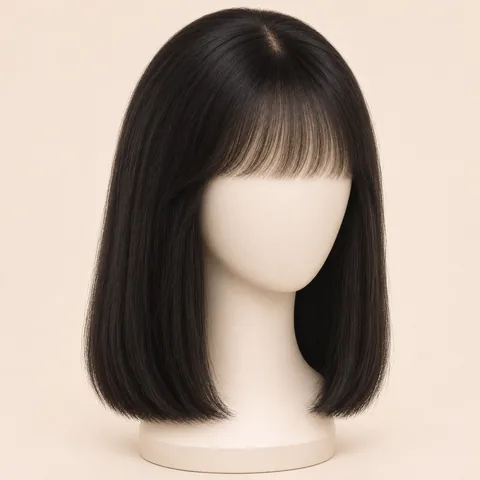
A boutique files it as
Honey layered lob · v2
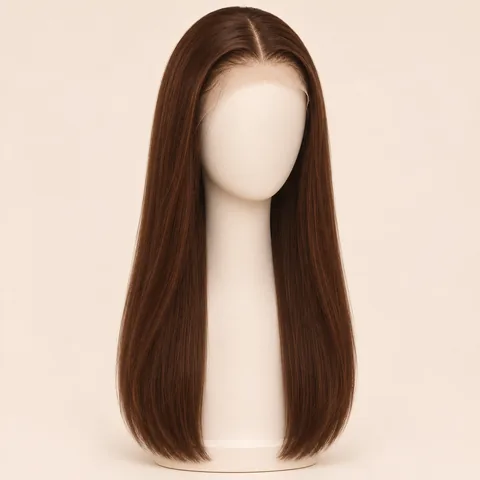
A studio files it as
Soft fringe look · v1
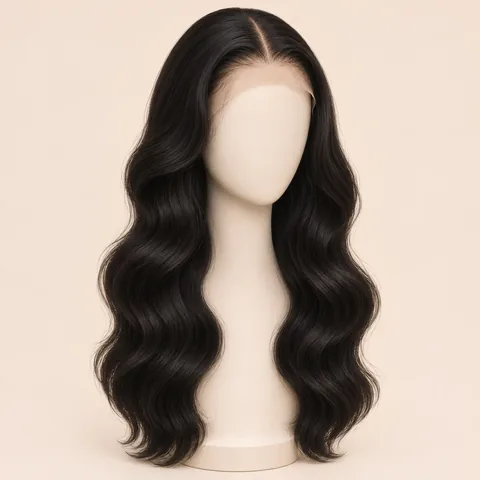
A brand files it as
Espresso centre-part long · v3
Buyers, Stylists and Brand Managers Can All Work on One Brief
The person sending a brief is not always the person who will check the sample. In a boutique it may be the owner and a stylist; in a brand, a buyer and a product manager. Whoever you bring in can take part.
On your side: the boutique owner
Anyone on your team can send a reference
Anyone can send a reference image, answer an open field or ask a question. Each answer goes into the brief like any other.
On your side: the brand manager
You name the person who confirms versions
That person's confirmation is what moves a brief to sampling and to approval.
On your side: a new colleague
The brief can be forwarded as it is
It is written so someone who never saw the conversation can read the style, the decisions behind it and what is still open.


Briefs are written in the terms your team uses with its own clients: hairline, parting, cap, colour placement, length, fullness. If your business has its own names for parts of a wig, say so, and your briefs use them.


English or French, Form or WhatsApp, Written Back to the Brief
English and French
Human Hair Wig Supply runs in two languages. The site is written in English, with French pages carrying the same content, navigation and request forms.
Buyers in French-speaking markets can send a reference image and ask about material and sample options in French from the first page they land on.
Lire en françaisForm and WhatsApp
The request form on this site takes a reference image link, your brief or your questions about material and sample options. WhatsApp suits quick answers on open fields and confirmations of a version. Whichever channel you use, anything that changes a style is written back into its brief.
Purchasing Brief Details, Section by Section, on the Home Page
The working method on this page is described in detail on the home page. Each part has its own section there.
- The purchasing brief What is on the page, and what agreed and open mean
- Reading your reference image Which fields are filled in first
- Fields missing from a photo What is marked open, and what is asked for
- Hairline, parting and cap construction How each is written and checked on the sample
- Brief versions and the sample check How changes and approvals are recorded
- Approved brief and reorders How ordering again works
- Supplier comparison A versioned brief set against chat-and-photo ordering
Company Details: Legal Name, Address and Hours
Human Hair Wig Supply is operated by Wuhan Beiyi Network Technology Co., Ltd. The same details appear in the footer of every page, and requests can be written in English or French.
| Address | Room 1801-1804, Block B, Aerospace Business Plaza, Jiang'an District, Wuhan 430014, Hubei, China |
|---|---|
| WhatsApp and phone | +86 177 0272 7677 |
| Business hours | Monday to Saturday, 09:00–18:00 (GMT+8) |
| Requests | Through the form on this page or on WhatsApp |
Send a Reference Image or Ask About Material and Sample Options
Whether you are a boutique with one best-seller, a studio with one wearer's look, a brand planning a line or a distributor with a market list, the first step is the same.
Send the reference image for your style and a first brief comes back with the readable fields filled in. If hair and cap come first for you, ask about material and sample options and give your target.
Prefer to send the photo straight away?
Send the reference photo on WhatsApp +86 177 0272 7677Monday to Saturday, 09:00–18:00 (GMT+8)
Replies in English or French.